
Al₂O₃
Alumina Ceramics
High-purity alumina for insulation, high-temperature containment and structural duty where strength and electrical isolation have to hold at the same time.
Material detailsFORM 02
Shallow and tall crucibles for melting, firing and holding aggressive media at temperature.
A crucible is a container that has to survive the contents and the cycle. The wall carries the load, the base carries the weight, and the material has to survive being heated and cooled without cracking.
Thermal shock, not peak temperature, is usually what ends a crucible’s life. How often the crucible is cycled matters as much as how hot it gets, so we ask for the cycle pattern before proposing a grade.
Specification and control points
| Material system | Alumina · Zirconia · Silicon carbide |
|---|---|
| Form | Shallow wide-mouth · Tall narrow · With or without cover |
| Working volume | To drawing |
| Wall and base thickness | To drawing, uniform where the load sits |
| Rim and base | As-fired or ground |
| Thermal shock duty | Stated as expected cycles, not only peak temperature |
| Inspection | Crack and dimensional check agreed before production |
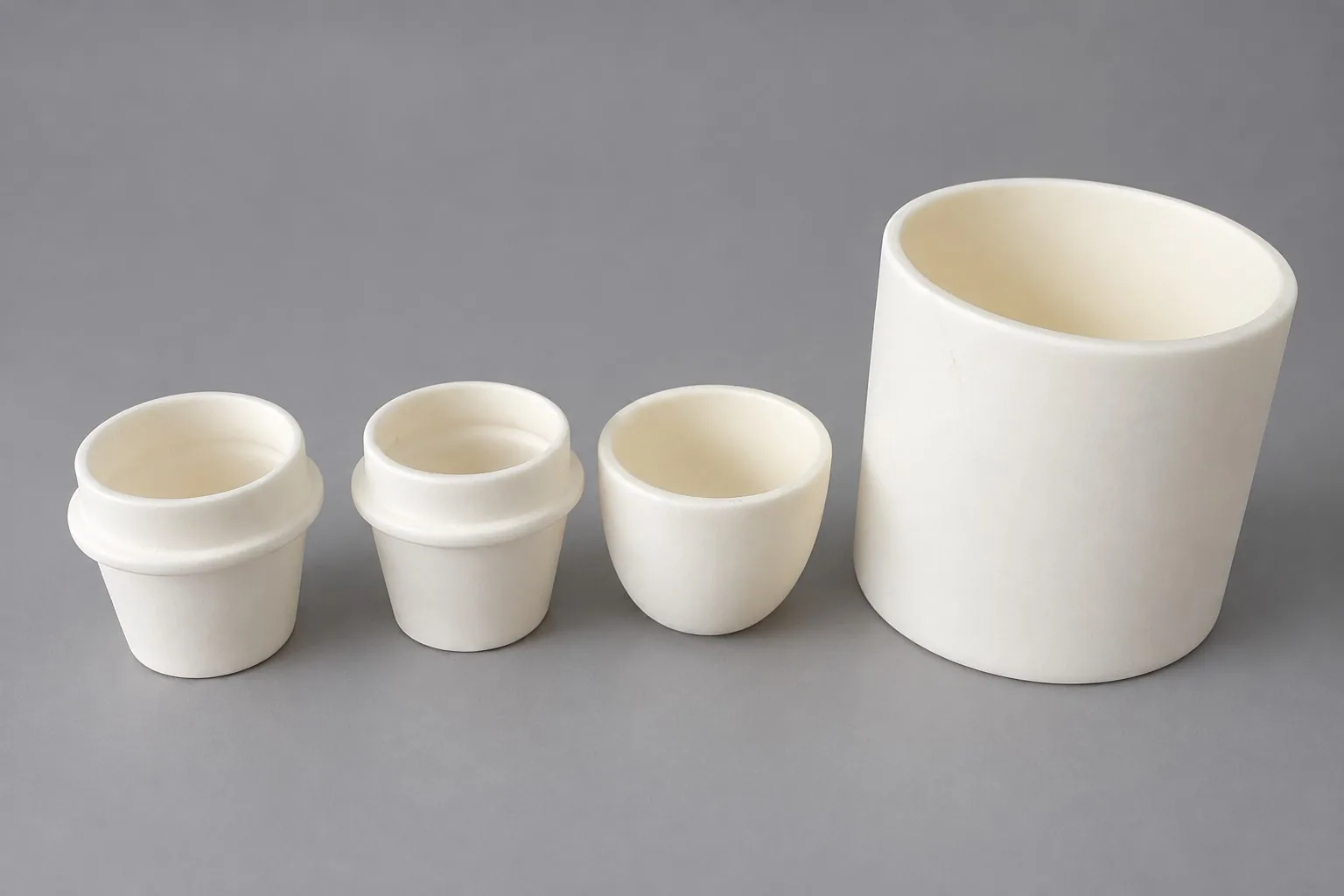
FORM 02Alumina crucibles, three with a collar below the rim — supplied part photograph
Part photographs
Supplied photographs for this catalogue entry. Captions describe the geometry in each frame — ask us for drawings and grades with your enquiry.
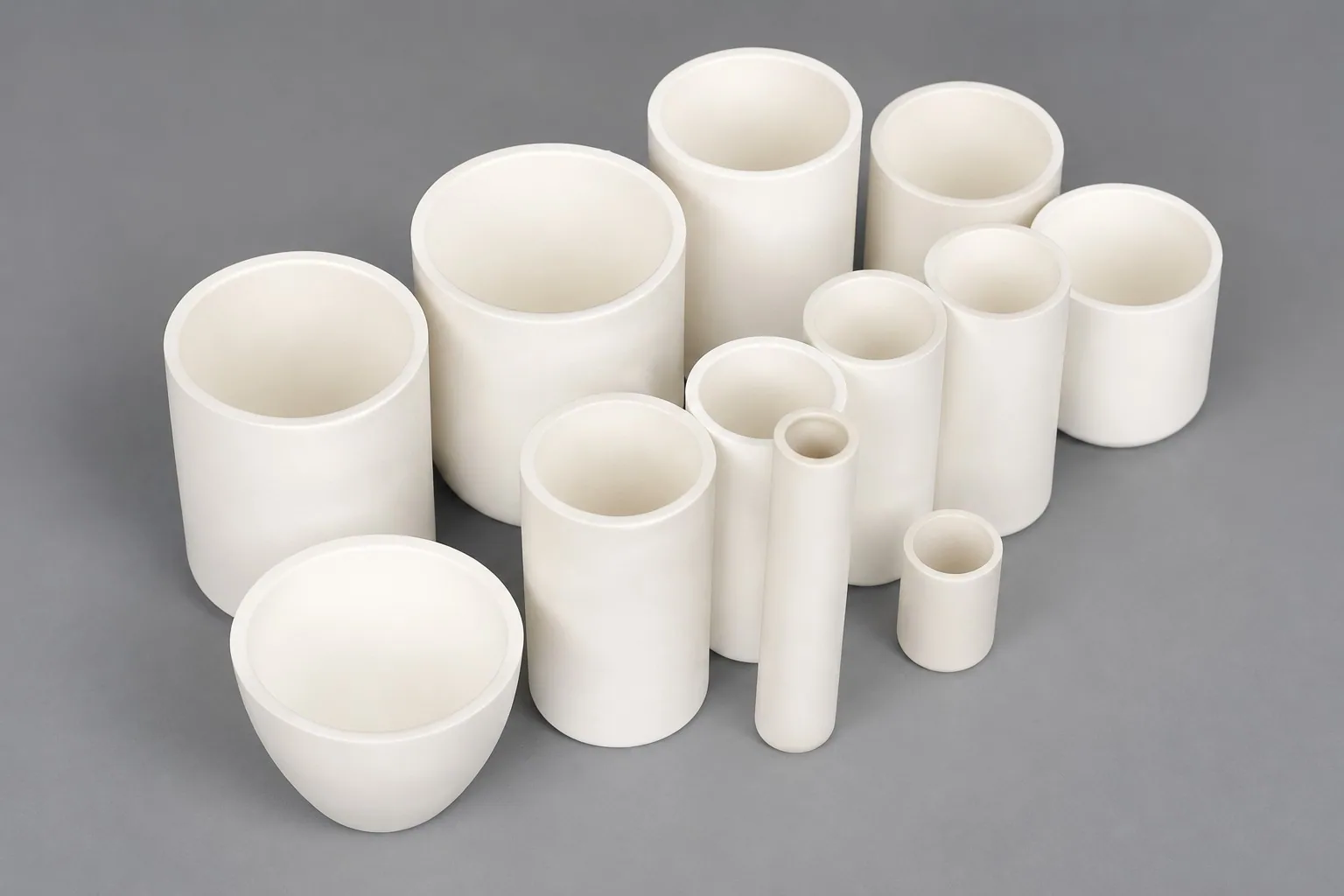
Alumina crucibles, cylindrical range
Alumina crucibles, three with a collar below the rim
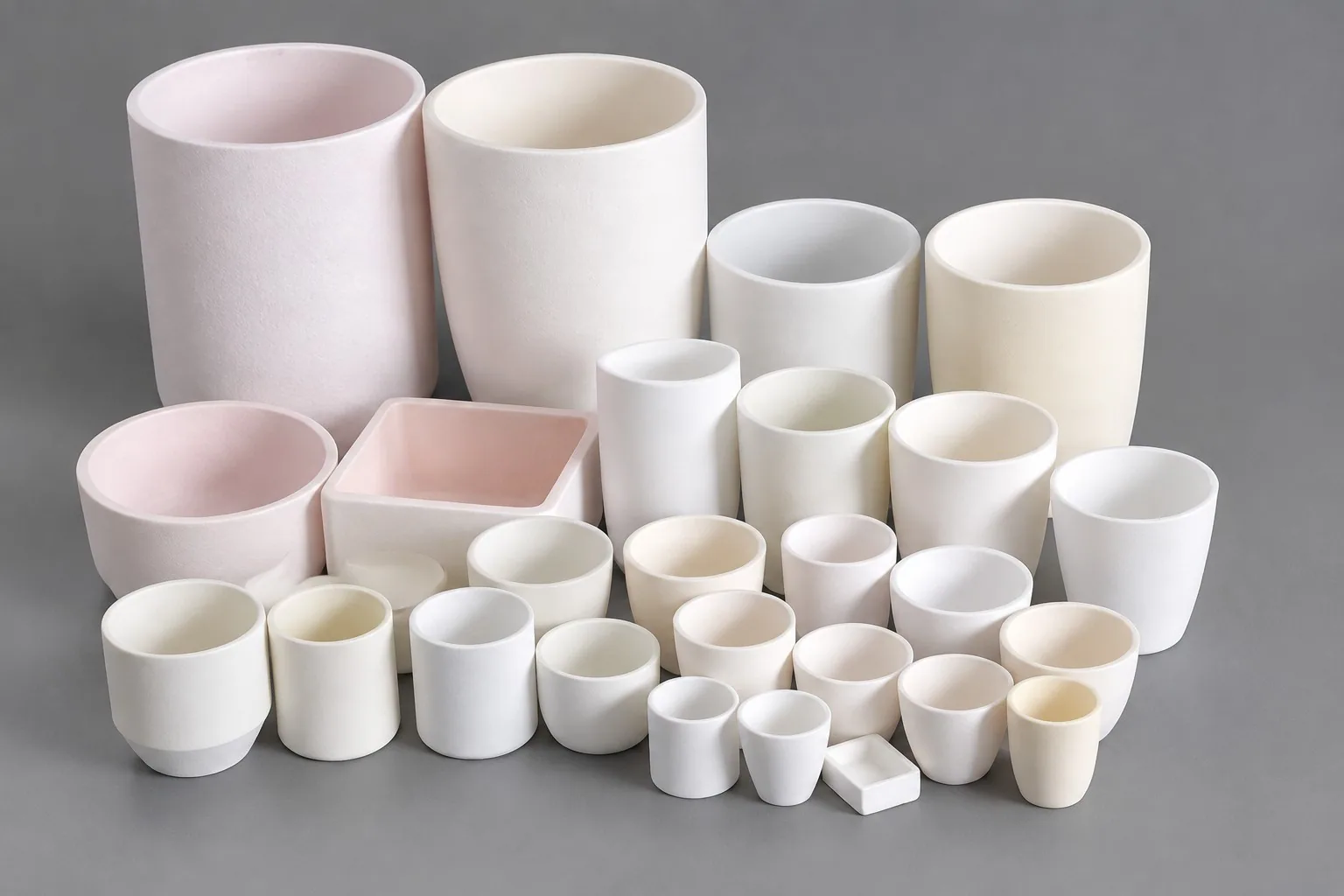
Zirconia crucibles in mixed forms, including a square basin
Typical applications
The industries below are the applications this material system is most often specified for. Tell us your own duty and we will confirm whether it is the right grade.
Made to your requirement
Supply stage
Sample part first, then batch production on the same material and process basis. Ask for the material data sheet with your quotation.
Related pages
Al₂O₃
High-purity alumina for insulation, high-temperature containment and structural duty where strength and electrical isolation have to hold at the same time.
Material detailsSiC
Silicon carbide for the most demanding thermal and abrasive duty: very high service temperature, thermal shock and aggressive wear.
Material detailsFORM 04
Flat plates and substrates where flatness, insulation and wear resistance decide the part.
Material details